Services
Micro Molding
What changes when shot weights drop below a gram and cooling times below five seconds? Almost everything.
MTD's molding machines, processes, and ISO Class 8 cleanrooms were built for validated production that preserves material integrity and delivers shot-to-shot consistency.
Why micro molding is different from conventional injection molding
Conventional injection molding is engineered for shot weights measured in grams or tens of grams. Micro molding operates below that — often well below 1 gram, and sometimes below 0.1 gram. At that scale, a few physical realities change the game:
- Melt volume is small relative to runner volume. Gate design, runner balance, and material residence time all have outsized effects on part quality.
- Cooling is fast and uneven. Thin walls solidify in milliseconds, preventing premature freeze-off in long or looping flow paths requires mold temperature control far tighter than conventional practice.
- Shot-to-shot variation is amplified. On a 30-gram shot, 0.1 gram of variation is invisible. On a 0.1-gram shot, it is the whole part.
- Standard press control resolution isn't enough. MTD's molding presses have plunger resolution of 0.03 mm— roughly 25% of the width of a human hair — because position accuracy at that scale is the difference between a full shot, a short shot, and flash.
Micro-scale medical manufacturing demands a different level of process control, validation, and engineering precision. With advanced micro injection molding, it is possible to achieve successful validated production of complex components in a variety of medical-grade plastics.
Overmolding
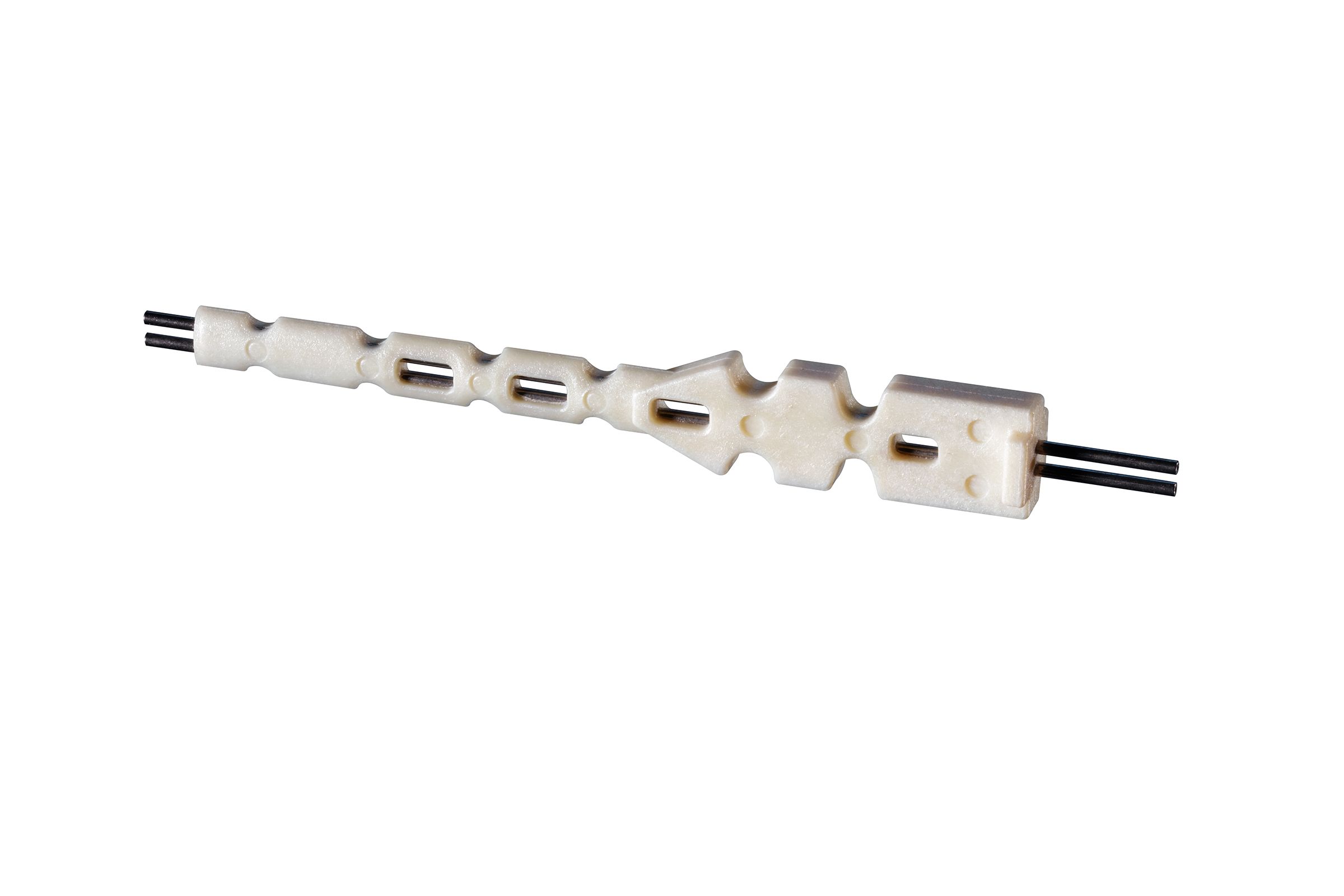
MTD can mold a polymer onto a pre-placed substrate (insert molding) or mold multiple polymers together in sequence (multi-shot).
Overmolding can reduce assembly steps, eliminate the need for adhesives and glues, and creates integrated polymer-over-metal or polymer-over-electronic components — including full encapsulation.
Advanced equipment, processes, and compliance
Advanced Injection Molding Equipment
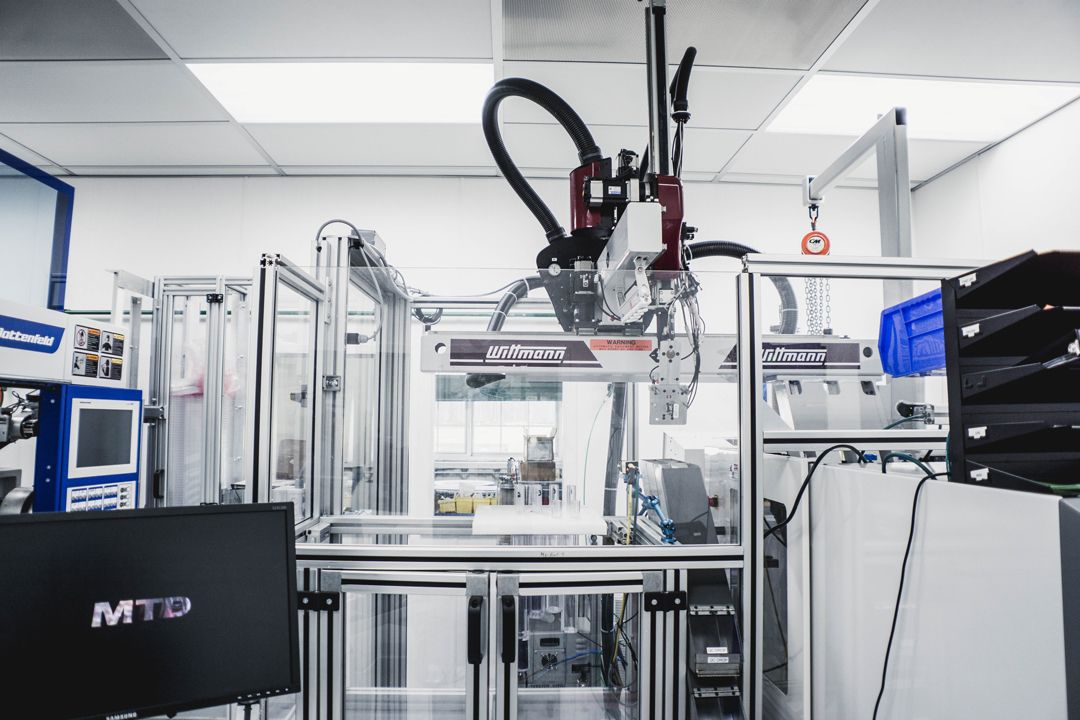
Our advanced equipment provides the widest possible process window for lights-out 24/7 validated production, with shot data archived for the life of the program. Cpk ≥ 1.33 on qualified programs, held across full production runs.
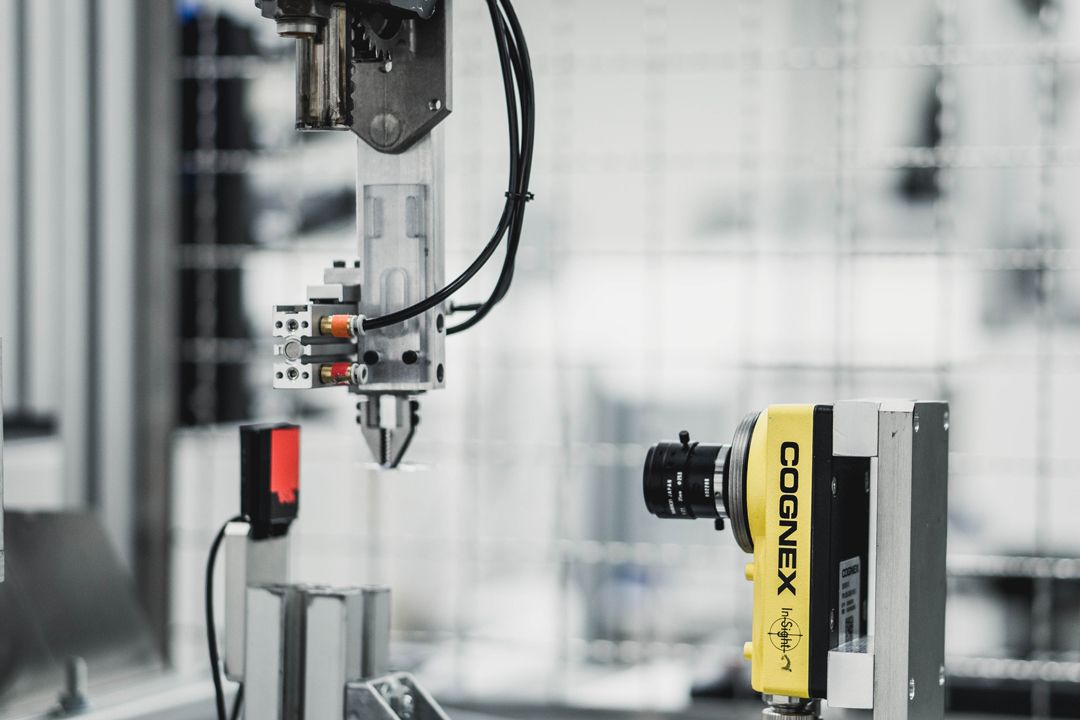
In-Line Inspection
By implementing in-line inspection systems, we are able to verify the absence or presence of details down to .0001”. This allows our clients the peace of mind that every part is 100% correct.
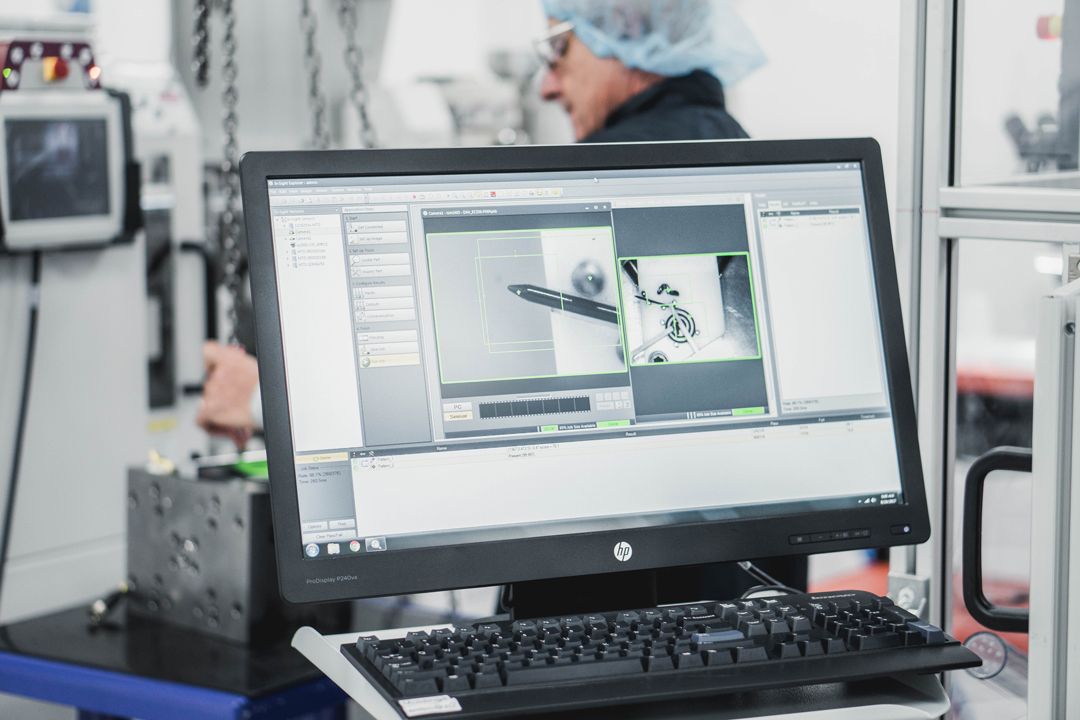
Process Monitoring and Control Systems
RJG eDart speeds up the visual inspection process and can tighten the window on how a cavity is packed, sort from good and bad, and predict dimensions. We have developed software to predict the dimensions of a medical component by assessing how cavity pressures affect specific dimensions.
Regulatory Compliance
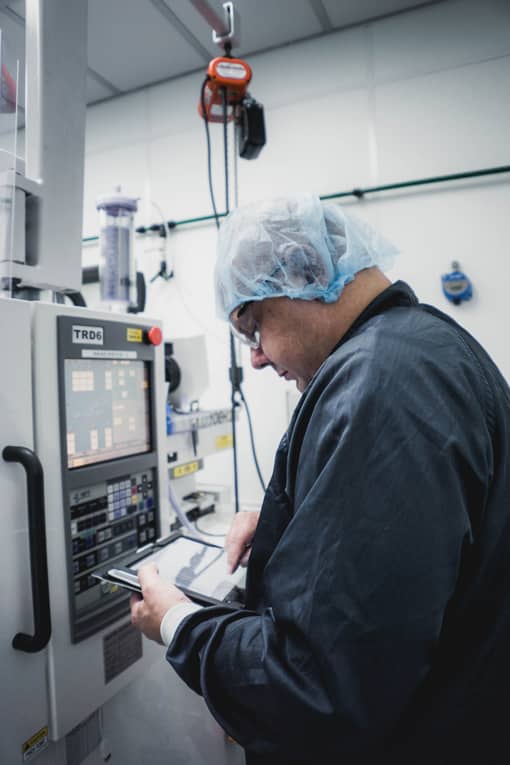
We understand the regulatory demands of the medical and healthtech markets. All molding, metrology, and packaging operations take place in ISO Class 8 Cleanrooms, and MTD Micro Molding is:
- ISO 13485:2016 Certified
- ISO 15378:2017 Certified
- ISO 9001:2015 Certified
- FDA Registered
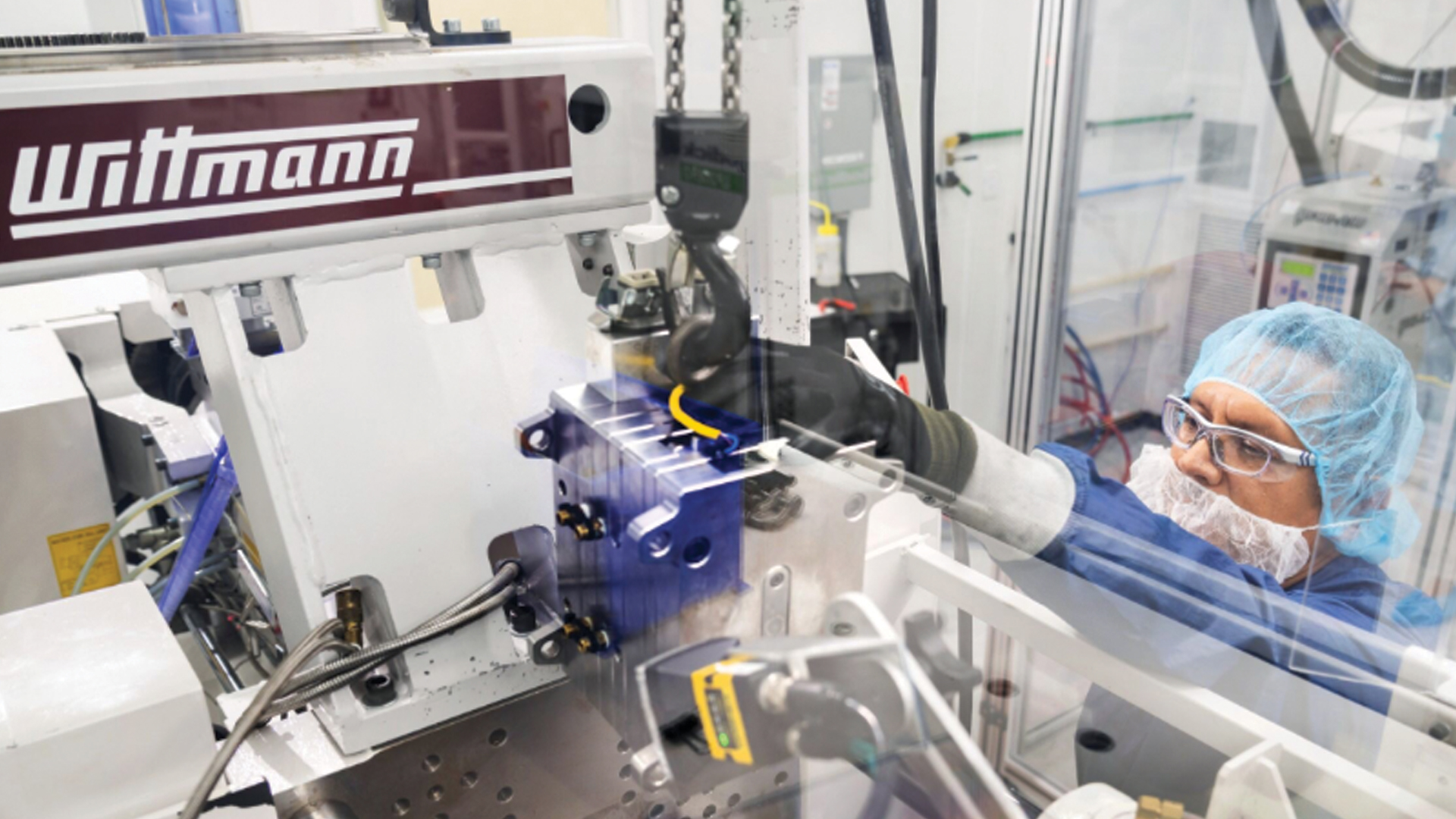

Bring your ideas to your molding partner and discuss your wishlist for your design. But know the product's requirements—you understand the limits of your design and the edges of success and failure.
Then lean on your molder and their knowledge of materials, processing, strategy, techniques, and development requirements to get the best outcome possible in the least amount of time.
How does MTD achieve shot-to-shot repeatability at micro scale?
Shot-to-shot repeatability at the micro scale depends on controlling every variable in the process. MTD combines specialized micro molding equipment, precision tooling, tightly controlled processing parameters, scientific molding practices, and in-line inspection strategies to maintain consistency across extremely small shot sizes and critical features.
What's the difference between micro injection molding and micro overmolding?
Micro injection molding produces a component in a single shot using one material, typically in a horizontal micro molding press. Micro overmolding or insert molding adds a second material over a substrate or existing component, in a vertical press setup designed for precise substrate positioning.
What cleanroom environment does MTD mold in, and does the part ever leave the cleanroom?
MTD supports ISO Class 8 cleanroom manufacturing environments designed for medical device production and contamination-sensitive applications. Molding, automated handling, inspection, assembly, and packaging all remain within the controlled cleanroom environment to minimize contamination risk and reduce unnecessary part handling.
How can overmolding protect our delicate substrate and improve the functionality of our design?
Overmolding can encapsulate and protect fragile substrates, electronics, metal components, or micro features while also improving sealing, biocompatibility, grip, flexibility, and overall device integration. In many applications, it also helps reduce assembly complexity by combining multiple functions into a single component or process step.
100% MICRO • 100% MEDICAL & HEALTHTECH • 100% IN-HOUSE

Micro Materials
Micro Part Design
Micro Tooling
Micro Molding
Micro Metrology